


Pigmentation Care: Types of Skin Spots and Care Approaches
Key takeaways
- Skin spots are not a single group; sun spots, melasma, post-acne marks and age-related spots differ in their causes and care priorities.
- The type of spot is determined by a doctor's assessment before care is planned; spots that change in shape, colour or size should be shown to a doctor before any care.
- Sun protection is part of pigmentation care; sunlight is one of the main factors in spots darkening and becoming visible again.
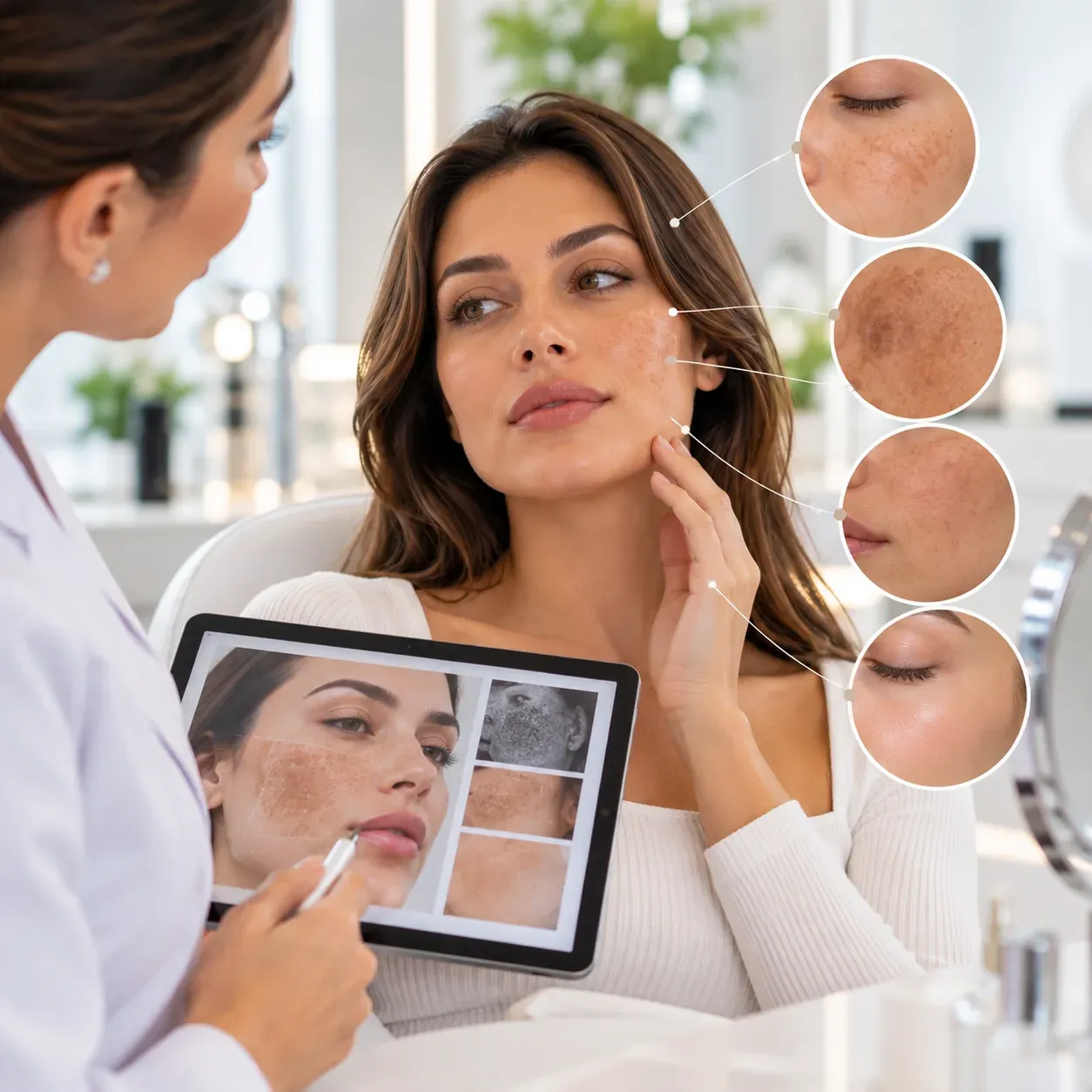
Pigmentation care is a periodic skin care treatment, planned according to the type of spot, aimed at reducing the appearance of pigment spots on the skin. Skin spots are not a single group: sun spots, melasma, post-acne marks and age-related spots arise for different reasons and call for different approaches. The first step of care is therefore to determine which type the spot belongs to.
At Max Hair, pigmentation care is performed by a specialist at our clinic in Istanbul, Türkiye, and planned after the type of spot has been determined by a doctor's assessment. The number of sessions and their intervals are set individually; sun protection is part of the process. Results vary from person to person.
Why do skin spots form?
The pigment that gives skin its colour is melanin, produced by cells called melanocytes. Factors such as sunlight, hormonal changes, inflammation in the skin and age can lead to increased or uneven melanin production in certain areas. These areas look darker than the surrounding skin and are noticed as spots.
More than one type of spot can be present in the same person. The depth, extent and trigger of the pigmentation directly affect how care is planned.
What are the types of skin spots?
The four types most often discussed in pigmentation care are summarised in the table below. The table is for general information; which type a spot belongs to can only be determined by a doctor's assessment.
The causes in the table are the most common ones; not every spot has the same trigger. The points considered in care also vary with the person's skin type and the condition of the spot.
| Type of spot | Common cause | Points considered in care |
|---|---|---|
| Sun spot (solar lentigo) | Long-term, repeated sun exposure; mostly on sun-exposed areas such as the face, backs of the hands and décolletage | Regular sun protection; changes in the spot's borders and colour monitored by a doctor |
| Melasma | Hormonal factors (pregnancy, hormone-containing medications), sunlight and genetic predisposition; usually symmetrical on the cheeks, forehead and upper lip | Identifying triggers, strict sun protection and avoiding irritating procedures; it may tend to recur |
| Post-acne mark | Colour change left on the skin after inflamed pimples (post-inflammatory hyperpigmentation) | Controlling active acne, not picking at the area and sun protection; not to be confused with acne scars |
| Age-related spots | Sun exposure accumulated over the years; more common with age, especially on sun-exposed areas | A doctor's assessment to distinguish them from other skin growths that look similar; regular sun protection |
How is the type of spot determined?
The type of spot is determined by a doctor's assessment before care is planned. The assessment covers how long the spot has been present, its location, colour, borders and whether it has changed over time; sun exposure habits, hormonal status and medications are also reviewed.
In everyday language, the terms sun spots and age-related spots are often used interchangeably; in both, sun exposure plays a decisive role. Melasma, on the other hand, requires separate planning because it can be linked to hormonal factors and may tend to recur.
Spots that change in shape, colour or size, bleed, itch or have irregular borders should be shown to a doctor before any care is considered. Such changes may require medical evaluation rather than cosmetic care.
How do pigmentation care sessions proceed?
Pigmentation care usually takes 30-60 minutes and requires no anaesthesia. It proceeds not in a single session but with a plan of several sessions set according to the doctor's assessment. A session generally includes the following steps:
- Skin and spot assessment: the condition of the spot and the skin is reviewed compared with the previous session.
- Cleansing: make-up, sebum and impurities are removed from the skin surface.
- Care application suited to the type of spot: care is carried out with products chosen according to skin type and the condition of the spot; ingredients and intensity are set by the specialist.
- Soothing and hydration: the treatment is completed with moisturising products aimed at soothing the skin.
- Sun protection and home care advice: the session ends with sunscreen, and care recommendations for the time between sessions are shared.
Which approaches is pigmentation care considered alongside?
Pigmentation care is a skin care treatment; for some types of spots, particularly melasma and widespread post-acne marks, the doctor may separately assess whether medicated products are needed. Methods such as chemical peels are among the approaches generally known in dermatology for pigmentation; the pigmentation care described in this article is a treatment performed by a specialist and planned with a doctor's assessment.
Vitamin skin care uses serums containing vitamins and antioxidants and is aimed at a dull, tired appearance; it is not a pigmentation treatment. If the doctor considers it appropriate, it may be included in the pigmentation plan as supportive care for the skin.
Why is sun protection part of pigmentation care?
Sunlight stimulates melanin production and is one of the main factors in spots darkening. Sun protection is therefore not an add-on recommendation but part of the pigmentation care process itself. Without protection, spots are more likely to become visible again, even while sessions continue.
- Daily protection: a broad-spectrum sunscreen is used every day, including on cloudy days and in winter.
- Reapplication: sunscreen is reapplied during the day when spending long periods outdoors.
- Timing: direct sun is avoided during peak hours.
- Physical protection: physical barriers such as a hat and sunglasses are used.
- Extra care in melasma: visible light and heat are also known as possible triggers; suitable product choice is discussed with the doctor.
Who may pigmentation care not be suitable for, and what are the possible side effects?
The treatment may be postponed for people with an active infection, an open wound or a recent severe sunburn in the treatment area. Spots that change in shape, colour or size or that bleed require medical evaluation first; such spots are not addressed within skin care.
Pregnancy and breastfeeding, the use of hormone-containing medications and certain medications that make the skin more sensitive should be shared before the treatment; the doctor decides whether some ingredients can be used during these periods. For people with melasma, the plan is made more cautiously, as irritating procedures may make the pigmentation more visible.
Possible side effects are usually temporary: redness and sensitivity may occur after the treatment. If these effects last longer or darkening of the spot is noticed, contacting the clinic is recommended. Results vary from person to person.
What are realistic expectations in pigmentation care?
Pigmentation care is a process aimed at reducing the appearance of spots; it cannot be said that spots will disappear completely. Change is usually gradual and is assessed over the course of the sessions.
Spots linked to hormonal factors, such as melasma, may become visible again with triggers even after care. The plan therefore covers long-term sun protection and home care as well as the sessions. Results vary from person to person.
Frequently asked questions
Related treatments
Related pages
This article is for general information only and is not a diagnosis or a treatment recommendation. Suitability is determined by a doctor's assessment; results vary from person to person.