


What Is Laser Lipolysis? How Is It Performed and Who May It Be Considered For?
Key takeaways
- Laser lipolysis is a body contouring treatment, performed by a doctor, in which laser energy is directed at fat tissue in specific areas.
- The form of application, duration and need for anaesthesia vary with the type of procedure and are determined by the doctor.
- Laser lipolysis does not replace diet and exercise and is not a weight control method.
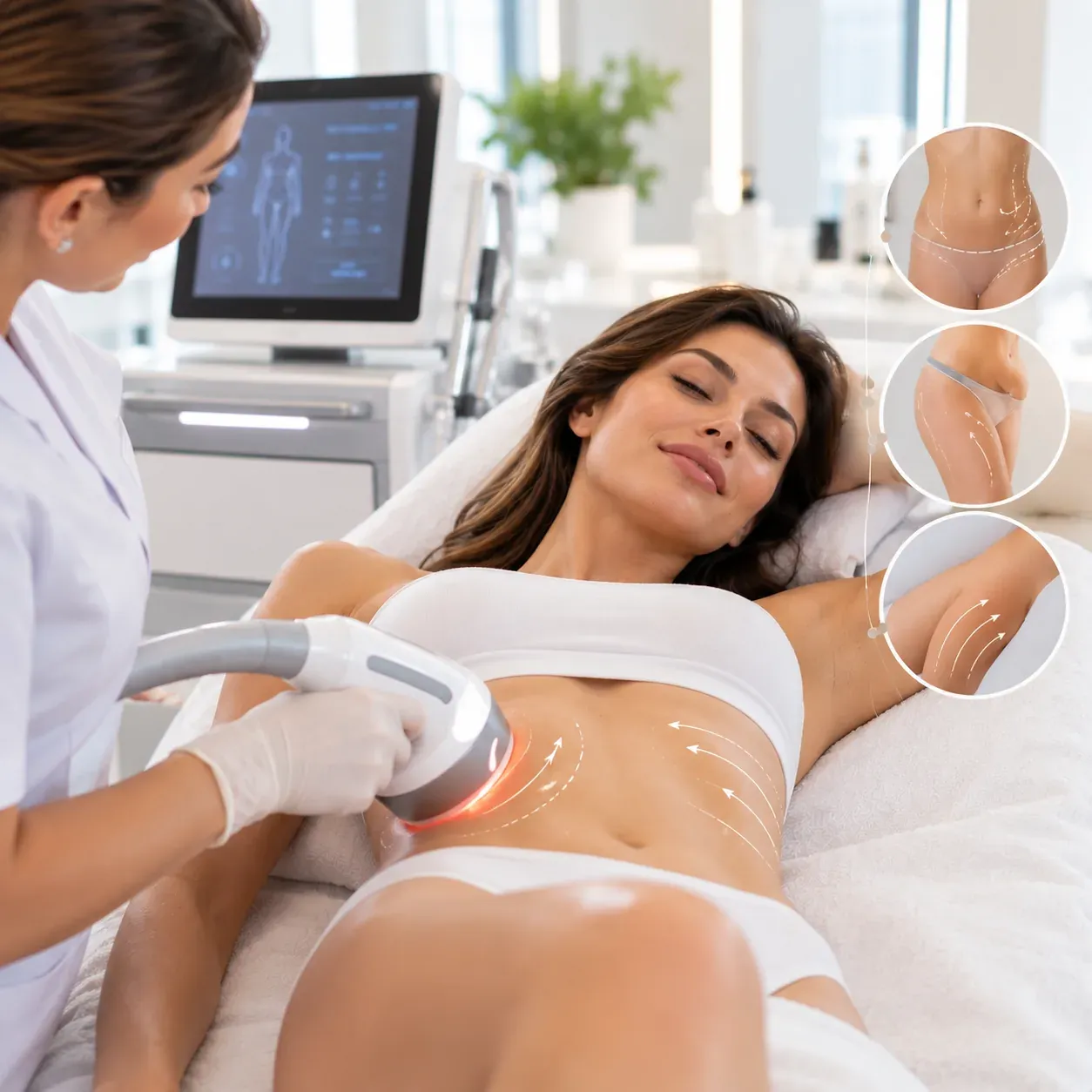
Laser lipolysis is a body contouring treatment in which laser energy is directed at fat tissue in specific areas of the body. Its aim is to provide support aimed at reducing the appearance of localised fat tissue that remains noticeable despite a balanced diet and activity routine. Laser lipolysis is not a weight control method and does not replace diet and exercise.
At Max Hair, laser lipolysis is planned following a doctor's assessment and performed by a doctor at our clinic in Istanbul, Türkiye. The treatment area, form of application and need for anaesthesia are determined individually. Results vary from person to person.
How is laser energy used on fat tissue?
A laser is concentrated light of a specific wavelength, and the energy of this light is absorbed in tissue. In laser lipolysis, the aim is for this energy to create an effect at the cellular level in the targeted fat tissue. The energy dose and treatment time are adjusted by the doctor with the surrounding tissues in mind.
It takes time for the change in the tissue to show in the appearance, and it emerges gradually. For this reason, evaluation takes place at follow-up appointments planned by the doctor rather than immediately after treatment.
The term laser lipolysis may be used for methods in which laser energy is applied in different ways. For this reason, the form of application, its duration and the need for anaesthesia are determined by the doctor's assessment rather than by a general template.
What are the key facts about laser lipolysis?
The table below summarises the key facts about laser lipolysis. Because items such as duration and anaesthesia vary with the person and the type of procedure, a general framework is given instead of fixed values.
| Topic | General information |
|---|---|
| Performed by | A doctor |
| Duration | Varies with the treatment area and method |
| Anaesthesia | Local anaesthesia may be used depending on the type of procedure; the doctor decides |
| Commonly planned areas | Abdomen, waist, under the chin, upper arms (following a doctor's assessment) |
| Session plan | Determined individually by the doctor |
| Possible temporary effects | Swelling, bruising, tenderness, a feeling of numbness |
| Diet and exercise | Does not replace them; not a weight control method |
Which areas is laser lipolysis planned for?
Laser lipolysis is considered for areas where fat tissue is locally noticeable. Which area is suitable is determined by the doctor, taking into account the amount of fat tissue, skin structure and the person's goal.
The areas below are given for general information; whether another area is suitable is also clarified by examination. Commonly planned areas include:
- Abdomen: fat tissue that remains noticeable, particularly in the lower abdomen.
- Waist: fat tissue that collects at the sides of the waist.
- Under the chin: localised fat tissue that affects the appearance of the transition between face and neck.
- Upper arms: fat tissue that accumulates on the back and inner side of the arm.
How is laser lipolysis performed?
The treatment is carried out with an individual plan after the doctor's assessment. The duration varies with the size of the treatment area and the form of application. The process generally follows these steps:
- Doctor assessment: medical history, current medication, the treatment area and expectations are discussed.
- Planning: the treatment area is defined and marked if needed; the form of application and session plan are clarified by the doctor.
- Preparation and anaesthesia: the area is cleansed; the doctor decides whether local anaesthesia will be used, depending on the type of procedure.
- Laser application: laser energy is applied to the planned area by the doctor in a controlled way.
- Post-treatment briefing: care of the area, return to daily activities and symptoms to watch for are explained.
- Follow-up: the area is evaluated at follow-up appointments planned by the doctor, and the plan is updated if needed.
How is anaesthesia decided in laser lipolysis?
The need for anaesthesia varies with the type of procedure and is determined by the doctor. Depending on the type of procedure, local anaesthesia may be used; this decision is made by considering the treatment area and the form of application together.
A sensation of warmth, pressure or mild discomfort may be felt during treatment; this varies from person to person. Letting the doctor know about any discomfort helps the treatment to be adjusted accordingly.
Current medication, known allergies and any previous problems with anaesthesia should be shared with the doctor during the assessment.
What can be expected after laser lipolysis?
Temporary swelling, bruising, tenderness and a feeling of numbness may occur in the area after treatment. These symptoms usually subside on their own; how long they last varies with the type of procedure and the person.
Return to daily activities, care of the area and when exercise can be resumed are explained individually by the doctor. If unexpected signs such as increasing pain, marked redness or fever are noticed, the doctor should be contacted without delay.
Rarely, undesired effects such as infection, heat-related skin injury or surface irregularities may occur; this is why the treatment is performed by a doctor and follow-up appointments should not be missed. Results vary from person to person.
Does laser lipolysis replace diet and exercise?
No, laser lipolysis does not replace diet and exercise and is not a weight control method. The treatment is aimed at the appearance of fat tissue in specific areas; a noticeable change in body weight is not the goal.
If weight is gained after treatment, fat tissue can accumulate again in other areas of the body. A balanced diet and regular activity remain part of the process after treatment as well.
For people with general excess weight, the priority is to address diet and activity under medical guidance. Laser lipolysis may be considered separately for localised fat tissue that remains noticeable after this process.
Who may laser lipolysis not be suitable for?
The suitability of laser lipolysis is always clarified by an individual doctor assessment. As a general framework, treatment may be postponed or not recommended in the following situations:
- Pregnancy and breastfeeding.
- Infection, an open wound or an active skin condition in the treatment area.
- Uncontrolled chronic conditions.
- A bleeding disorder or use of blood-thinning medication.
- An expectation of general weight control.
- Unrealistic expectations that the treatment cannot meet.
How is the decision about laser lipolysis made?
The decision on laser lipolysis is made together after the examination and consultation. The doctor proposes a plan after assessing whether the fat tissue in the area is suitable for the treatment, as well as skin structure and health status.
If the assessment suggests that the treatment is not appropriate, this is shared openly. When it is found suitable, the treatment area, form of application, need for anaesthesia and follow-up schedule are planned by the doctor; individual instructions always take priority over general information.
Frequently asked questions
Related treatments
Related pages
This article is for general information only and is not a diagnosis or a treatment recommendation. Suitability is determined by a doctor's assessment; results vary from person to person.