


Anaesthesia and Comfort in Hair Transplant: What Can You Feel During the Procedure?
Key takeaways
- Hair transplant is performed under local anaesthesia; the person stays awake throughout the procedure and sensation in the treated area is reduced.
- A brief, mild sensation may be felt while the anaesthetic is applied; afterwards a feeling of touch or pressure may be noticed, and the level of discomfort varies from person to person.
- Breaks, position adjustments and ongoing communication with the team support comfort; tenderness may be felt in the first days after the procedure.
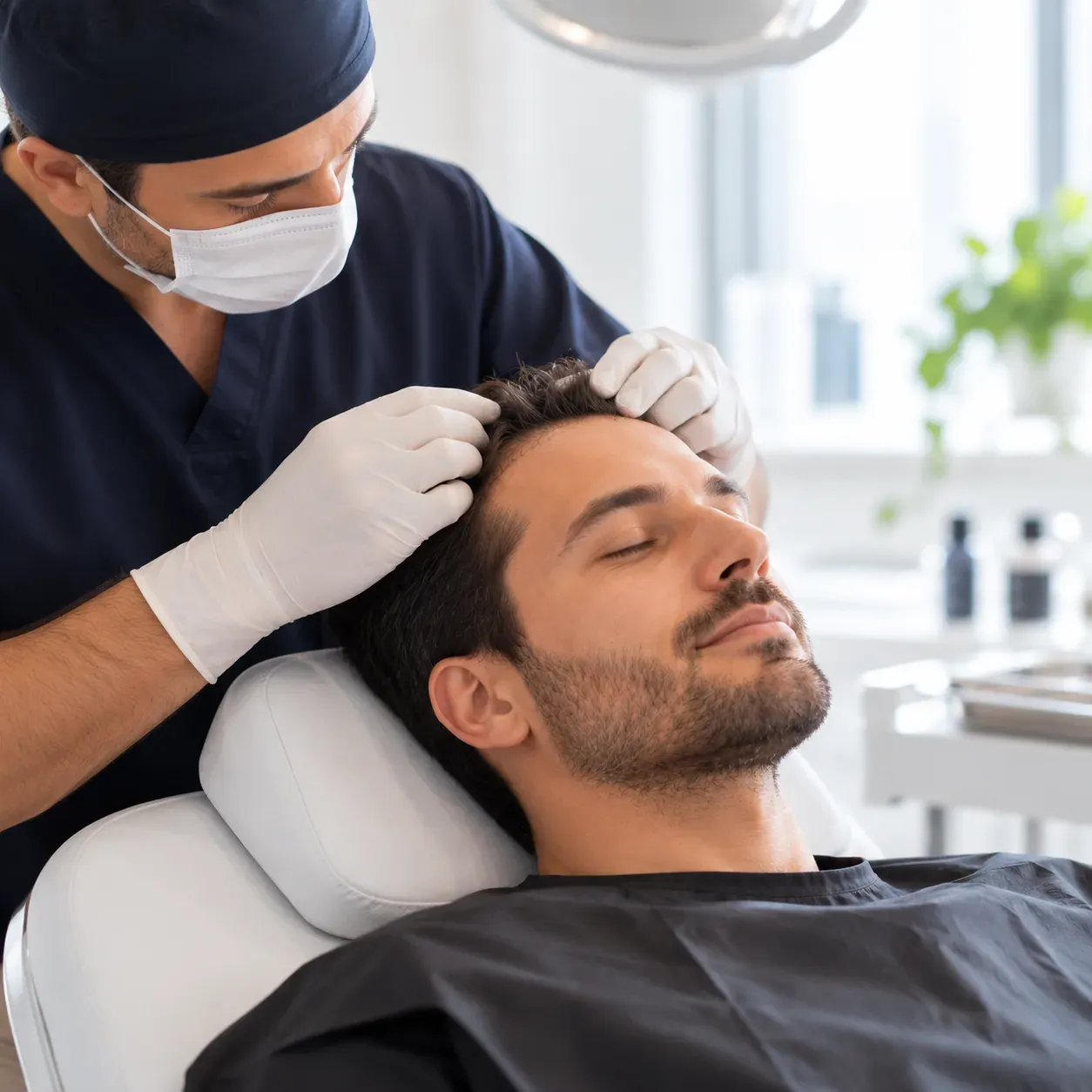
Hair transplant is performed under local anaesthesia: the donor and recipient areas are numbed, and the person remains awake throughout the procedure. A brief, mild sensation may be felt while the anaesthetic is applied; once the area is numb, a feeling of touch or pressure may be noticed. The level of discomfort varies from person to person, and comfort is prioritised throughout the procedure.
At Max Hair, the application of anaesthesia and the monitoring of comfort throughout the procedure are planned under doctor supervision at our clinic in Istanbul, Türkiye. This guide is for general information; individual guidance is given by the doctor after your medical history has been assessed.
What type of anaesthesia is used in hair transplant?
Classic FUE, DHI, Sapphire FUE and Max Hair Transplant are performed under local anaesthesia. Local anaesthesia reduces sensation only in the area being treated; the person stays conscious and awake, can talk with the team and can share any discomfort right away.
The duration depends on the method and the planned area: the typical duration is 6-8 hours for Classic FUE and DHI, and 4-6 hours for Sapphire FUE and Max Hair Transplant. Because the procedure takes several hours, the effect of the anaesthesia is monitored throughout.
How is local anaesthesia applied?
Anaesthesia is applied area by area according to the stages of the procedure. The method of application and the amount used are determined by the doctor; the process usually follows these steps:
- Pre-assessment: allergy history, medications and chronic conditions are reviewed by the doctor before the procedure.
- Preparing the area: the hairline and recipient area are marked, shaving is done if needed and the area is cleaned.
- Anaesthesia of the donor area: before graft harvesting, the back and sides of the head are numbed, usually with small injections using a fine needle.
- Checking the effect: after a short wait, the area is checked to confirm it is numb, and the procedure begins only then.
- Anaesthesia of the recipient area: before moving on to channel opening or placement, the recipient area is numbed separately.
- Renewal when needed: in longer procedures, the effect of the anaesthesia is monitored and may be renewed by the doctor when needed.
What can you feel during the procedure?
What you feel depends on the stage of the procedure. The table below gives a general summary of what is done at each stage and what may be felt; the experience can differ from person to person.
In the numbed area, a feeling of touch, pressure or slight pulling may be noticed. If you feel discomfort, you are encouraged to tell the team; the doctor can reassess whether the anaesthesia is sufficient.
| Stage | What is done? | What may be felt? |
|---|---|---|
| Anaesthesia | Local anaesthesia is applied to the donor and recipient areas | A brief, mild sensation may be felt during application |
| Graft harvesting | Grafts are harvested one by one from the donor area; the head is positioned to allow access to the donor area | A feeling of touch or pressure; tiredness from staying in the same position for a long time |
| Channel opening and placement | Depending on the method, channels are opened and grafts are placed; the head is positioned to allow access to the recipient area | A feeling of touch, pressure or slight pulling |
| As the anaesthesia wears off | The procedure ends, care guidance is shared and you are discharged the same day | Sensation returns gradually; tightness and tenderness may be felt |
| First days | Guidance on washing, sleeping position and the follow-up schedule is followed | Tenderness, mild swelling and redness may occur in the recipient and donor areas |
How is comfort supported throughout the procedure?
Because a hair transplant takes several hours, comfort depends not only on anaesthesia but also on how the procedure is carried out. The following practices support comfort throughout the procedure:
- Breaks: short breaks can be taken during the procedure to rest, drink water or use the restroom.
- Position adjustment: the position of the head and body is adjusted according to access to the area being treated, and it can be changed from time to time to reduce the tiredness of staying in the same position for a long time.
- Ongoing communication: because the person is awake, discomfort, tension or tiredness can be passed on to the team at any moment; the team monitors comfort throughout the procedure.
- Monitoring the anaesthesia: when the effect is noticed to be wearing off, the doctor can reassess the anaesthesia and renew it if needed.
- Comfortable clothing: on the day of the procedure, comfortable clothing that opens at the front and does not need to be pulled over your head is recommended.
Does the choice of method affect the anaesthesia and comfort experience?
Classic FUE, DHI, Sapphire FUE and Max Hair Transplant use the same anaesthesia approach, namely local anaesthesia, so the anaesthesia experience is similar across methods. The practical differences between the methods relate more to duration, the shaving requirement and how channel opening and placement are carried out.
For example, DHI can be planned unshaven in certain regions depending on the case, while shaving is usually required for Classic FUE and Sapphire FUE. As the duration increases, the need for breaks and position changes may also increase; this is why the method is chosen by the doctor not on the basis of comfort alone, but together with an assessment of the donor and recipient areas.
What should you pay attention to before the procedure for comfort?
A comfortable procedure day starts with accurate information. Fully reporting your medications, supplements, allergies and chronic conditions in the planning consultation is important so that the doctor can plan the anaesthesia correctly.
If you use medications or supplements with a blood-thinning effect, decide whether to pause them only together with your doctor. Your doctor may ask you to avoid smoking and alcohol for a certain period before the procedure; discussing your concerns in advance also makes it easier to know what to expect during the day.
What kind of tenderness can be expected in the first days after the procedure?
As the anaesthesia wears off, sensation returns gradually. In the first days, tenderness, tightness, mild swelling and redness may be felt in the recipient and donor areas; in some people the swelling may spread towards the forehead.
A temporary feeling of numbness in the recipient and donor areas may also persist for a while. During this period, following the care and medication recommended by the doctor, not scratching or touching the scalp, avoiding heavy exercise in the first week and avoiding direct sunlight for the first two weeks are recommended.
Tenderness is usually most noticeable in the first days and decreases over time; its duration and intensity vary from person to person. For topics such as sleeping position and the first wash, the doctor's guidance is followed.
Who may local anaesthesia not be suitable for, and what are the possible side effects?
In people with a history of allergy to local anaesthetics, cardiovascular disease or a bleeding disorder, those taking blood thinners or those with an uncontrolled chronic illness, the doctor may request an additional assessment, change the anaesthesia plan or postpone the procedure. Pregnancy and breastfeeding should also be shared with the doctor before planning.
Unwanted reactions related to local anaesthesia are rare; allergy and medical history are therefore reviewed before the procedure, and the person is monitored by the team throughout. General possible side effects of hair transplant include temporary swelling, redness, crusting, tenderness, a feeling of numbness and, rarely, infection or folliculitis.
These effects are followed up by the doctor through care instructions and follow-up appointments. Results vary from person to person.
Frequently asked questions
Related treatments
Related pages
This article is for general information only and is not a diagnosis or a treatment recommendation. Suitability is determined by a doctor's assessment; results vary from person to person.